AYU WHITMORE
Stable meaning structures or “third places”, a term coined by urban sociologist Ray Oldenburg, are civic spaces serving as community builders, and they are collapsing. The free market is treated as an all-encompassing system promoting secular values like individualism and scientific progress, speculative realist ideologies hinging on capitalism emerging such as accelerationism. Following the mass shutdown of comedy clubs, arcades, and the impossibility of renting real estate due to inflation and stagnation in wages, youth culture has been sublimated and gone online. Historian and philosopher Hannah Arendt described power as communication, not coercion and control; power “exists only as long as the group keeps together”. (Arendt, 1958/1998, p. 200) We youths connect through social media, often developing parasocial relationships, and for many our identities are built around online consumption. Rebellious non-participation is the norm; centennials are becoming increasingly atheistic, the UK more cosmopolitan, and as churches are attended less, sanctity of the family, faith, and civic participation is valued less, leading youths try to find their own meaning in this neoliberal age. Nietzsche proclaimed, “God is dead,” (2010, §125) addressing this crisis of meaning. Nihilism thrives now the possibility of becoming is replaced by consuming on a digital marketplace of souls.
Coined by sociologists Donald Horton & Richard Wohldenoting, a relationship characterized by a one-sided sense of intimacy felt by a fan for a prominent figure.
A range of ideologies that call for the use of capitalism to create radical social transformations, typically associated with the CCRU (Cybernetic Culture Research Unit)
ACCELERATION ACROSS THE RUBICON
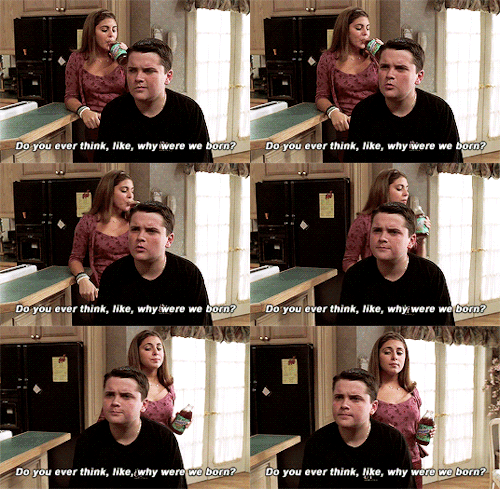
GIF © Home Box Office, Inc. (The Sopranos (1999)).
Click icons to enlarge


We were tasked to amplify our everyday environment, and I made a conscious effort to capture the rawest parts of Nottingham. I applied Henri Lefebvre’s thought, taking a psychogeographical approach. Unitary Urbanism, key praxis of Situationist International, rejected the Euclidian approach to urban architectural design, an approach that produced sterile, alienating environments. Their revolutionary approach theorised by key Situationist writer Guy Debord included “dérives” or drifts: wandering and pondering about your relation to the environment, mapping your emotional topography, “a playful-constructive behavior and awareness of psychogeographical effects.”(Debord, 1956/2006, pp. 50‑54).
International organization of social revolutionaries made up of avant-garde artists, intellectuals, and political theorists. (1957-1972)
Outdoor communal areas drew me in. The Tram Line skatepark spot particularly - it was cliquey, but hardly unwelcoming. Street skating is dying alongside alternative cultures like punk rock, and the environment was reflective of this. Graffiti seemed almost performative, music played from an old system, and it was sparsely populated considering the number of students in Nottingham. It made me long for an adolescence I didn’t have, a coming-of-age arthouse film like Mid90s: edgy, distinctive, aesthetic. I felt out of place walking through the area.
A personal gripe I have with our government representatives is that their understanding of basic civics does not enable them comprehension of economic growth's disconnect to the economic realities most people live in. Homelessness is an issue in Nottingham. It’s particularly rough around my area, and so I pictured the unkempt streets, litter, and old furniture strewn across gardens. The terraced houses have seen better days. Our uni house has leaky taps, a dodgy boiler, creaking floorboards. Despite it all, I like it. It’s comfortable, a bit kitsch, and full of my roommates' tchotchkes. Perfectly imperfect. Dérive helped me to notice the beauty in the mundane everyday, warts and all.


The resulting collages are quite visceral, unlike the subdued calm I felt while drifting, but suit the revolutionary message of the graffiti I pictured: "NO WAR BUT CLASS WAR". Given the chuavinistic climate, we are met with increasingly subversive art, vandalism barely scratching the surface. "All space is occupied by the enemy. We are living under a permanent curfew. Not just the cops — the geometry." (Kotányi & Vaneigem, 1961/2006, §6) is a quote from Raoul Vaneigem, founder of Situationist International, encapsulating the flaws of modern urban life— streets are layed out restrictively, and so I used the photo of a drain to appear like bars of a jail cell, confining, policed not just by authority but by the urban environment itself.
Moving forward I aim to include similar digital processes, merging traditional illustrations with edited photographs, producing busy, iterative results that appropriately communicate the chaos of online spaces. Excessive posterization and overlaying images with blending modes gave a distinctly graphic feel that abstracts discernible forms, effective for conveying virtual unreality.
I created a collection of digital collages from my photography influenced by post-internet art, Blockchain platform Solana’s “Avant-Gay” scene at the forefront and serving as my main point of reference. "Traitmaxxed" NFT schizocollages aim to be as crude as they sound, the excess of "traits" create a maximalist, idiosyncratic appearance. Unexpectedly, crypto enthusiasts and artists united online, exploiting the mechanics of viral propagation by moving as a "crypto cult".
I'm aware captioning the images with mainly socialist quotes/slogans in a graphic style inspired by a subculture affiliated with the e/acc, a movement unconcerned with the adverse consequences of no-holds-barred innovation, is a little ironic. I aimed to convey the tension between the real and wired - the old children's bicycle discarded among leaves leaving a nostalgia for simpler times, a romanticisation of plain predigital life when micro-tribal identities had yet to supplant real community. In a technofeudal age we are data points in a digital fiefdom, in response to structural alienation we must reassert community beyond algorithmic mediation - teenage angst is only exacerbated through digital escapism, an overlooked form of addiction.
The Avant Gay art movement emerged as a reaction against the early Ethereum NFT "fine art chain" scene. Miladymaker is a notable example, neo-chibi and ironic.
Effective accelerationism, a 21st-century tech-centric movement advocating for rapid, unrestricted technological progress (particularly in AI)
WORKSHOP 1
Our first task was a one minute exercise illustrating the person opposite pulling exaggerated expressions. Luckily I had the most enthusiastic of partners (see following interpretations of him posing sideways and upside-down).
Words contradicting the expressions are written underneath, changing the feeling of the image entirely. His seemingly overjoyed expression paradoxically paired with "melancholy" makes us wonder, is it a facade, or a manic cry for help?
Choosing one of these "characters", we were tasked to locate a point of interest from out the 9th floor windows, considering how our character would interact with the environment below and illustrating them doing so. Stress was put on not overworking a piece. Consideration behind the composition matters more than technical ability.
Ultimately I chose 'FEAR', his expression seems sinister yet playful, the accompanying word gives a sense of unease. I aimed to play with the fact he was upside-down.


At first, I was uncertain about where to position my character. I began with a simple sketch of the Arkwright Building viewed from the Design and Digital Arts balcony. My initial thought was to place the character on the balcony ledge, manically smiling while standing on the edge. This composition however would have sacrificed the best element of the sketch, the inversion, how he was upside-down.
The balcony itself presented another challenge; its sleek glass boundary reminding me of a scene in Succession, constructed in a way that made it difficult to imagine a believable way for the character to hang from it.
In the end, the idea felt too grounded and familiar, inside the building I was constantly in. I decided to explore new settings to provoke more imaginative ideas.


I came across a crane on my walk around Nottingham and immediately felt it a more interesting and fitting setting to place my character in. To convey fear alongside the devious playfulness of his expression, I drew him him hanging precariously from a lattice boom crane, perspective from below, emphasising the scale and vertigo. The lighting on his face makes him look even more sinister.
This workshop was challenging, not only did I have to push my perfectionist boundaries and grind out unpolished artwork fast, envisioning a scenario simply based upon a 1 minute portrait was tough. I will continue to consider characterisation through a spatial lense, how personality can be easily visually conveyed through relationship to the environment.
Book 1 - Present Day, Present Time
WORKSHOP 2


Click icons to enlarge
Feedback from my tutor suggests I overworked the zine post assembly, negative space could have been utilised better for an impactful spread that would improve contrast and visual weight. Some spreads seem unbalanced in their clutter. The point of the exercise was to get into a flow of creative childlike artlessness, the intricacy in some of the illustrations takes away from the abstraction. When presented to my peers (who are also very online) it was still indecipherable, in my next attempt I'll try convey a clearer narrative. One idea I have is to start the book with a simple graphic that sets the theme, such as, "Why don't women like nice guys?", an innocuous comment that precedes the incel pipeline.
We were set the task of drawing on A2 before dividing into A4 and re-assembling the pages into a zine, producing an abstract result. I tried emulating the same maximalist incoherence of the post-internet schizocollages. References are strewn throughout relevant to the internet (art, discourse, and symbols alike): Pepe the frog and wojaks, futurist Mussolini art, figures such as Luigi Mangione. It appears a cultural collage, but lacks the explicitness in its relation to the internet, the images becoming meaningless without context. I drew Schloss Neuschwanstein, a watercolour by Hitler, representing both inconspicuous neo-Nazism online and debate around whether Hitler (and fascists in general) lack in artistic merit, however none of the people who flicked through my zine noticed this, and to them it was just as is - a castle. The result is more a litmus-test for the chronically online, a book of internet easter-eggs.
Assuming I do go down the book route rather than an audio-visual, I think a discordant visual narrative could work, similar pages of internet-vomit overwhelming the space, contrasted with mundane portayals of everyday reality. An impactful end to the book could be a direct screen clipping of the last messages a real individual sent before committing a school shooting, or a sign-off from a manifesto.


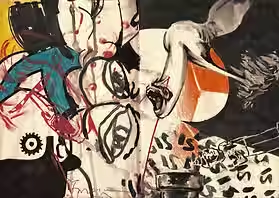


ZINE RESEARCH
The Age of Earthquakes by Douglas Coupland, Shumon Basar, and Hans Ulrich Obrist is an updating of Marshall McLuhan's The Medium Is The Massage (an encapsulation of how technology and design impacted 1960s culture) for what they descibed as our "extreme present".
The zine decodes a world redefined by the Internet, perfectly aligning with my theme. Douglas Coupland sardonically described the indifference we have to great feats of technology that shape the way we live as such, "We have these amazing things that just dropped into our laps, and now we just want something new. That’s the other part of the relationship with the future we just spoke about it. You’re scared of what’s coming next, but you also want it. What would you call that kind of relationship? Co-dependent?"
Click icons to enlarge
The zine utilises typography as well as images and illustrations from over 30 contemporary artists and graphic designers to update what Quention Fiore described in 1967 as “a dialogue between the computer and the book”. An obvious design consideration was the usage of contrast. Hans Ulrich Obrist emphasised the importance of the "classic empty page," and how, in a way, the book is a medium. "For the avantgarde of the 60s, the artist book is very much at the call of conceptual art." For a book outcome, I would like to adopt their use of contrast, having double spreads of just one illustration against pages of text that contextualise the images.


Click icons to enlarge
McLuhan’s presentation of visceral images and bold text is emulated in The Age of Earthquakes, readers being grabbed and warned in a format not dissimilar to self-help books. We are threatened and enlightened to what accelerated advances in technology and communication are doing to our collective and individual psyche.
“The paperback itself has become a vast mosaic world in depth... a transformation of book culture into something else.” McLuhan had said in 1964,
the ‘something else’ being the current culture of addiction to screens.
I aim to embed technology into paperback in a similar way, reappropriating internet-coined phrases to turn them into a kind of literature, similar to alt-lit.
La nueva carne (“the new flesh”) is a magazine project by Fuego Camina Conmigo, an independent creative agency based in Barcelona, aiming to awaken people of "the changes that the digital world, like a capricious god provokes in us and at the same time does not allow us to assimilate because we are too immersed in it." The human being is changing as a result of the digital era - the magazines cover topics such as identity, transhumanism, privacy, big data, and how memory and technology interact.


I picked up issue three, one that looks at faith in the digital age, not just religious faith but faith in technology - belief in immortality via transhumanism, AI as a new kind of deity.
Our digital routines (Check notifications, swipe, repost, refresh) become ritualised behaviours that shape how we experience community. Invisible code and algorithms govern our lives, like a digital scripture. Our smartphones, clouds, servers: we treat devices as portals to truth and connection, even though we can’t see how they work, and they become our objects of faith. Tech futurism becomes prophecy. Ideas like the singularity, AI superintelligence, or techno-immortality resemble eschatology. Our faith is outsourced to machines, a secular belief in the invisible networks that connect us forming a new kind of mysticism.
This sort of digital esotericism I aim to incorporate into my book/audio-visual, portraying the tribal formations that mimic the sociological structure of religious communities; the myth, doctrine, leadership, and taboo.


Click icons to enlarge


SIGNAL A journal of International Political Graphics & Culture is an ongoing book series covering political graphics and cultural production of international resistance and liberation struggles. It is edited by Justseeds collective members Josh MacPhee and Alec Dunn, a decentralised organisation of artists contributing graphics to grassroots struggles for justice.
I picked up the ninth edition. Aaron Terry discussed the film posters of the Eastern Bloc in it, and I'd seen an interview before In Signal: 03 about his mobile silkscreen setup, a sort of traveling printshop he brings to community spaces. The goal is to demystify the process of screen printing and make political graphics a collective act instead of a studio-bound art practice. It is fitting of Signal’s ethos, how graphic art intersects with social movements around the world, the importance of participation, deconstructing the idea of art being reserved for the elite.

Don’t _____ Me, I ______ For _____ © Alex Lukas (2025).
Regarding the edition I read, the section that caught my attention was "Print-On-Demand America Great Again: The Aesthetics and Means of Production of the Far Right" by Alex Lukas. I've long been interested by the so-bad-its-good visual culture of MAGA; the trucker caps, flag-covered rally on wheels, suburban devotional kitsch and mar-a-lago faced trad wives. Alex Lukas spent several years on Amazon downloading the graphics of vendors selling custom flags to explore populist republican visual design trends in print-on-demand graphics. Don’t _____ Me, I ______ For _____ is a series of emblazoned flags with phrases like "Don't blame me I voted for him", which gained popularity after Trump's 2020 loss. The exploration of how digital marketplaces have shifted political graphic production interests me, the irony in copy paste patriotic aesthetics aiming to flaunt individual rights. It feels like an easy thing to satirise, the MAGA "cult" having one of the more absurd political uniforms.

Left Cultures brings together the writing and art of a wide range of contemporary leftist voices. Unlike The Age of Earthquakes it is less format focused, instead featuring written pieces alongside relevant art. "Ne travaillez jamais" by Robert Rubbish (incredible name, disproving nominative determinism) stuck with me. "Never work" is what it translates to, what Rubbish described as one of the most radical statements he'd ever encountered. Originally scrawled on a Parisian wall by Situationist theorist Guy Debord, it became emblematic of the revolutionary spirit that shaped the May 1968 student uprisings.


What struck me, however, wasn’t the recount of history of visual protest but Rubbish’s proactivity in tracing that history physically. Starting with a single photograph, he went on an urban drift in true Situationist fashion to locate the original wall, and lo and behold he found it up the Rue de Senie. His discovery underscores how physical exploration and emotional resonance intertwine. It was quite touching to know even with the grafitti scrubbed away the revolutionary words still resonated with someone, and that the workings of a disbanded collective haven't gone forgotten.
I would like to incorporate this proactive practice into my own, somehow. Political thought is useless without political action accompanying it. For an audio visual specifically, I could perhaps incorporate my own videography relevant to the subject.
WELCOME TO THE POST-TRUTH WORLD
"Even those who thought they were attacking the system - the radicals, the artists, the musicians, and our whole counterculture - actually became part of the trickery, because they, too, had retreated into the make-believe world, which is why their opposition has no effect and nothing ever changes."
A tutor had enthused about HyperNormalisation, a documentary directed by Adam Curtis and I noticed its content was closely linked to the themes of my project. It touches upon ideas surrounding internet culture, political detachment, and even how political movements were organised online. One quote that particularly resonated with me described how “radicals across America turned to art and music as a means of expressing their criticism of society,” that rather than changing the world materially, “the new radicalism should try and change what was inside people’s heads.” This idea strongly connects to contemporary online culture, where politics is often communicated through memetic aesthetics and irony rather than collective political action. The documentary’s description of a generation “detaching themselves and retreating into an ironic coolness” I can definitely attest to judging by atmosphere of many online spaces I am researching, particularly anonymous forums and algorithm-driven social media environments where sincerity, humour, and extremism become increasingly blurred.
The concept of “hypernormalisation” itself, defined in the documentary through a Soviet writer’s observation that people became “so much a part of a system that it was impossible to see beyond it”, seemed especially relevant. I I find strong parallels between this idea and contemporary digital life, where users are aware of algorithmic manipulation, surveillance, and feel a perpetual sense of depressive anhedonia that Mark Fisher described, yet continue participating because these systems feel unavoidable and fill a void. The film explicitly touched on algorithms, and the observation that platforms fed more of the same back to users, gradually isolating them “into bubbles that excluded anything that might challenge people’s pre-existing beliefs.” It directly relates to my interest in online radicalisation where internet users can become absorbed into increasingly self-reinforcing ideological environments.
I was also interested in the documentary’s argument that cyberspace originally emerged as a utopian escape from political and social systems, “liberated from old corrupt hierarchies of politics”, before becoming dominated by prediction, behavioural management, and corporate power. Quotes such as “perception management — reality is simply something that you handle” and “angry people click more” connect strongly to the contemporary attention economy, where outrage and emotional intensity are transformed into engagement metrics. I aim to include this visual language into my project, perhaps using fragmented collage, graphic advertisements, internet ephemera, and overstimulating compositions to reflect the psychological condition of online existence. Like Adam Curtis’ documentary practice itself, I see the work not only as research or commentary, but as an artwork constructed through montage, juxtaposition, atmosphere, and archival accumulation; attempting to immerse the viewer within the disorientating emotional logic of contemporary networked culture.


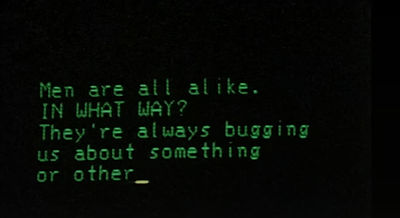
© British Broadcasting Corporation. (HyperNormalisation (2016)).
Book 2 - My Twisted Simulation
Click icons to enlarge
I showed this to my peer who's quite online and he said the readability has certainly improved, topically it was more obvious. I have to be careful to find a balance, using internet esoterica that isn't too cryptic to the point its indecipherable even to the average NEET.
I did however overdo the small text, scale wasn't utilised in regards to contrast. Using more bold typography that takes up space would break up some of the wordy pages.
In my second book I considered contrast more, resulting in a clearer conveyance of my topic. I wrote excerpts of the incel's hero Elliot Rodger's manifesto "My Twisted World", subsequently inspiring the title. The replacement of "world" with "simulation" was to convey the idea of the internet being a space of hyperreality - the user no longer engages with actual people they consider their political opponents; radicalised individuals enter extremist ecosystems, hyperreal ideological worlds that feel more true than lived experience. Most of Elliot's (and many others') issues are self-manifestations they affirmed through enabling algorithms.
Structurally, the first page of this book does a better job at establishing the theme than the entirety of Present Day, Present Time. It shows a slightly cringe google search, a seemingly innocent starting point before a great unravelling. I again stole aphorisms, spam, slogans and infamous UI from the internet, reading as far more poetic in this format, a technique the creators of The Age of Earthquakes used. Different styles meshed together such as the copy of the amateurish Sonichu #0 comic contrasted with the bold and graphical rendition of Yakub make for an interesting mixed-media read.


The collection of paintings above I did as the very first assignment we were set over the Summer holidays: 4 lies and 1 truth. I chose the topic China out of many others. We tend to underestimate our own susceptibility to propaganda - Major Western powers paint China as an authoritarian Communist state, Orwellian and technocratic. I decided to create art based upon harmful stereotypes: China being a surveillance-state, having globe conquering ideas, being undemocratic, the Chinese being smarter than the average Anglo (a pseudo-eugenic stance).
Seeing David Dees' art in La nueva carne, I came to appreciate the artistry behind schizocollages. Dees has inspired a kind of contemporary propaganda in the form of memes with his insane works. They capture the absurdity of conspiracies like QAnon, 5G, and Tylenol and vaccinations causing autism.
It has spawned waves of ironic (and sometimes unironic) contemporary Agitpop graphics, and I hope to employ some of these digital collaging techniques to evoke the same absurd feeling.


I created my own Dees inspired art, complete with internet jargon, memetic imagery, and conspiracy. I submitted this piece to the first ever Illustration Open Challenge, and the process can be read about in more depth in my journal.

Click to enlarge + explanation


PEER REVIEW


We had our dreaded peer review session, enabling people to leave post-it notes commenting on our work.
A recurring theme in my feedback was that people appreciated the depth of my research and the layout of my website more than the actual illustrations themselves. I've made a mental note to spend more time experimenting and drawing, rather than getting too carried away searching for inspiration.
The written feedback I got reinforced this further: my website was described as "professional," though it was suggested that I could "provide more visuals".
Overall, I agree with and am satisfied with the marking of my work at this stage. It's clear that I need to experiment more and create a wider range of outcomes moving forward.


Moving into the audio visual section of the brief, I hope it will provide greater clarity on whether I pursue a book format or an audio visual outcome. Regardless of the direction I choose, I aim to further experiment with both digital and analogue processes, using my research as a point of reference.
